
A Study on the Correlation Between Intersection Traffic Environment Complexity and Traffic Accidents: A Case Study of Atlanta, Georgia, USA
Published in Journal of the Korean Geographical Society, 2025
Abstract : This research investigates visual, structural, and point-of-interest (POI) complexity factors that influence drivers’ perception and understanding of traffic conditions at road intersections. It also examines the relationship between intersection complexity and vehicle crashes. Considering that intersection land use varies with urbanization levels, the study categorizes samples into three groups—high-density, medium-density, and low-density—using the Fractional Impervious Surface metric. Fourteen variables were identified to evaluate intersection traffic environment complexity in Atlanta. The findings reveal that in high-density areas, structural factors such as lane count, speed limits, and traffic volume are strongly and positively correlated with traffic accidents. In medium-density areas, structural complexity variables, sky ratio, and the presence of well-known POIs also show positive correlations with crashes. In low- density areas, speed limits are significantly associated with accidents, while a higher vegetation ratio appears to reduce crash occurrences. This study contributes to the field by providing a method to quantify intersection traffic environment complexity and proposing tailored strategies for traffic accident reduction based on urban development levels.
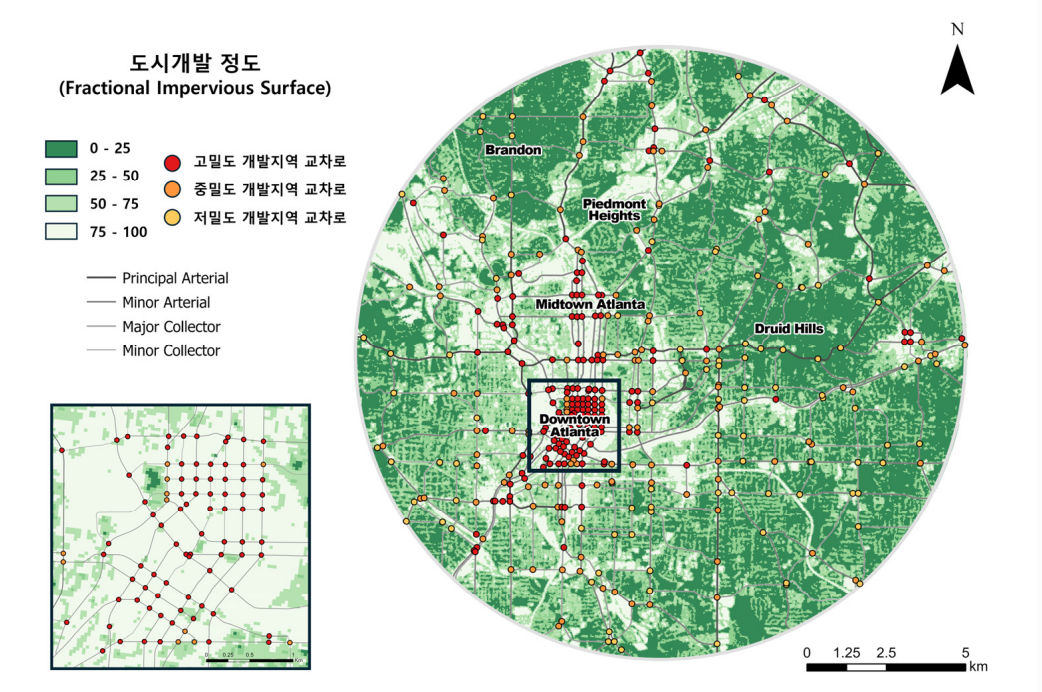 Figure 1. Urban development level at intersections |
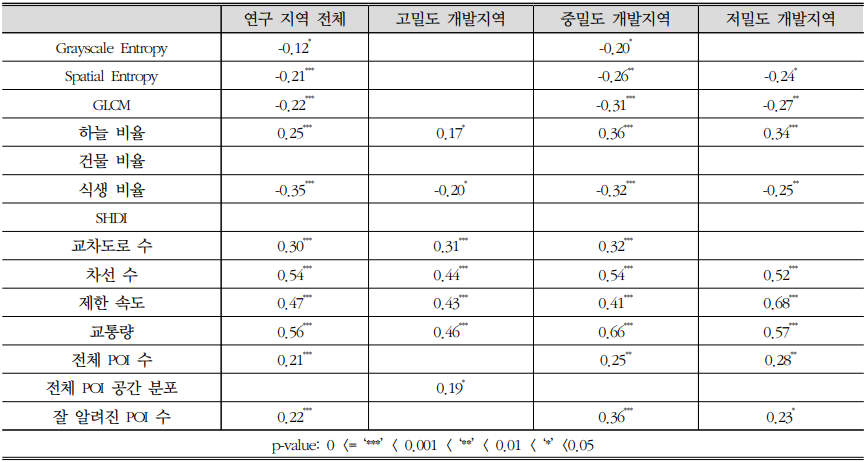 Figure 2. Spearman correlation coefficients between |
Recommended citation: Cho, Y., Seong, J. C., Lee, S., & Hwang, C. S. (2025). 교차로 교통환경 복잡성과 교통사고의 상관성 연구 - 미국 조지아주 애틀랜타를 사례로 - (A Study on the Correlation Between Intersection Traffic Environment Complexity and Traffic Accidents: A Case Study of Atlanta, Georgia, USA). Journal of the Korean Geographical Society, 60 (4), 451-463.
Download Paper